

Phone
+86-731-82250427
Address
25th floor, C3 Building, Wanda Plaza, Kaifu District, Changsha, Hunan Province, China.
 Jan 23 2026
Within the austenitic stainless steel family, the selection of 904L stainless steel over the ubiquitous 316L represents more than a simple grade upgrade—it is a fundamental shift in material philosophy driven by specific, severe environmental challenges. While 316L serves as the versatile, cost-effective baseline for chloride resistance, 904L is engineered as a targeted solution for chemical environments where standard molybdenum-alloyed stainless steels reach their operational limits. The choice between them hinges on a precise understanding of the corrosion mechanism, not just the corrosive agent itself.
The distinction is rooted in a deliberate alloying strategy. 316L, defined by its 2-3% molybdenum addition, achieves its "marine-grade" status by significantly improving resistance to chloride pitting and crevice corrosion compared to 304 stainless steel. 904L, however, implements a different tactical approach. Its defining characteristic is the synergistic combination of a substantially higher molybdenum content (4-5%) with a deliberate 1-2% copper addition. This copper is not incidental; it fundamentally alters the alloy's electrochemical behavior in non-oxidizing acidic environments, particularly sulfuric acid, by promoting cathodic reaction kinetics that stabilize the passive film. This makes 904L uniquely capable in processes involving reducing acids, where 316L's passive layer may become unstable.
This compositional divergence manifests in a clear performance boundary. For applications involving ambient seawater, mild organic acids, or general atmospheric exposure, 316L provides an optimal balance of performance and economy. Its limitations become apparent in more aggressive regimes: concentrated chlorides at elevated temperatures, mixtures of acids (e.g., sulfuric with halides), or processes where sulfurous acid or its salts are present. Here, 904L's superior pitting resistance and, critically, its dramatically higher resistance to chloride stress corrosion cracking (SCC) become decisive. The high nickel content (~25% in 904L vs. ~12% in 316L) is a key factor in mitigating SCC, making austenitic stainless steel 904L essential for hot, closed-loop systems where chlorides can concentrate.
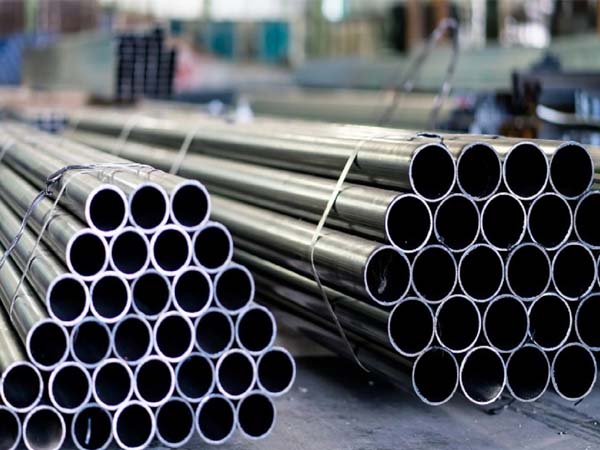
Consequently, their application landscapes are distinctly partitioned. 316L remains the default choice for architecture, marine hardware, food processing, and pharmaceutical equipment—sectors where reliability and regulatory compliance are paramount, but the chemical environment is controlled. 904L finds its indispensable role in the core of process industries: as heat exchanger tubing in seawater cooling where reliability is critical, in piping and vessels for sulfuric acid pickling and handling, in wet-process phosphoric acid production, and in components for flue gas scrubbing systems exposed to complex, wet acidic condensates.
The economic decision is therefore not one of direct comparison but of application-specific necessity. Specifying the more expensive 904L where 316L is sufficient incurs unnecessary cost and potential fabrication complexity. Conversely, selecting 316L for a service condition within 904L's performance envelope risks premature failure, unplanned downtime, and safety hazards with a total cost far exceeding the initial material premium. The most technically sound specification aligns the alloy's inherent defensive strengths—316L's robust general defense versus 904L's specialized, reinforced fortification—with the precise nature of the environmental attack it will face.