

Phone
+86-731-82250427
Address
25th floor, C3 Building, Wanda Plaza, Kaifu District, Changsha, Hunan Province, China.
 Mar 5 2026
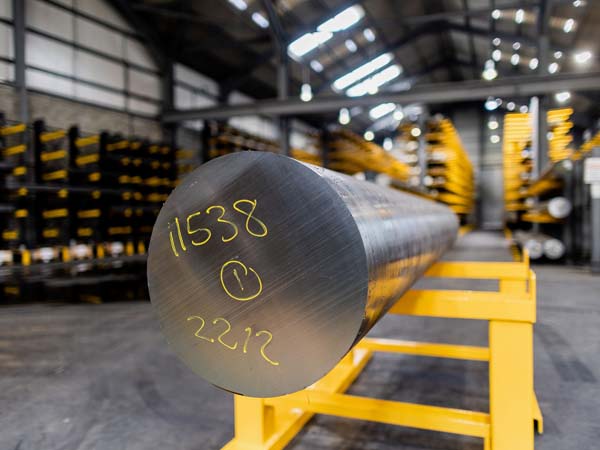
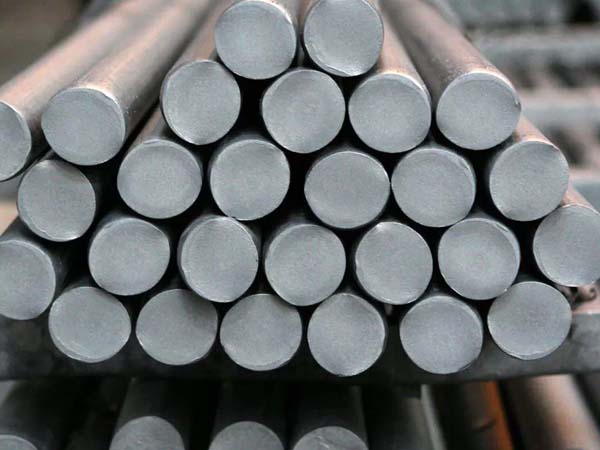
If you're designing, sourcing, or machining a component that demands high strength, good corrosion resistance, and manufacturability, 17-4PH (also known as UNS S17400 or Grade 630) stainless steel bar is likely on your shortlist. But specifying the right bar stock is just the beginning. The real value—and potential pitfalls—lie in understanding the journey from a raw bar to a finished, high-performance part.
This guide bridges the gap between procurement and production. We’ll decode the standards and specs for buyers, then dive into the practical machining and heat treatment knowledge that shop floors need. Whether you're an engineer finalizing a design, a purchaser comparing quotes, or a machinist setting up the first operation, this is your roadmap for success with 17 4PH bar.
Before you place an order, getting the specification right is critical. A misunderstanding here can lead to unbudgeted costs or a part that can't be machined.
This is the most important decision you'll make. 17-4PH is a precipitation-hardening alloy, meaning its final properties are achieved through a low-temperature heat treatment aftermost machining is done.
Condition A (Solution Treated): This is the soft, machinable state in which the material is supplied. Think of it as a "blank canvas" with a typical hardness of ~HRC 30. Over 95% of bar stock is purchased in this condition because it allows for extensive and complex machining with reasonable tool life.
Precipitation Hardened Conditions (e.g., H900, H1025, H1150): These bars have already undergone the final age-hardening heat treatment. They are purchased at full strength (e.g., H900 is ~HRC 44) and are suitable only for verylight finishing or for applications used as-is. Never order a bar in condition H900 if you need to perform significant milling or turning.
|
Condition |
Typical Hardness (HRC) |
Ultimate Tensile Strength (MPa) |
Key Characteristic |
|
A (Solution Treated) |
~30 |
~1000 |
Ductile, optimal for heavy machining. |
|
H900 |
~44 |
~1310 |
Maximum strength & hardness. |
|
H1025 |
~38 |
~1070 |
Good strength-toughness balance. |
|
H1150 |
~32 |
~1000 |
Stress-corrosion resistance favored. |
Your purchase order should reference a governing standard to ensure consistency.
ASTM A564 (Type 630): The most common commercial and industrial standard for bar, wire, and forgings.
AMS 5643: The aerospace material specification, which often imposes stricter controls on chemistry, cleanliness, and testing.
The Mill Test Certificate (MTC) is Your Proof: Always require the MTC. It verifies the heat chemistry, mechanical properties, and confirms the material condition meets the ordered standard.
You've sourced the correct Condition A bar. Now, how do you machine it efficiently and prepare it for its final properties?
17-4PH in the solution-treated condition machines similarly to a tough austenitic stainless steel but with a notable work-hardening tendency.
Tooling: Use sharp, premium-grade carbide inserts or tools. Positive rake angles are beneficial.
Speeds & Feeds: Employ moderate surface speeds and consistent, positive feed rates. Avoid letting the tool dwell or rub; this work-hardens the surface and makes subsequent passes difficult.
Coolant: Use a generous flow of coolant to control heat, improve tool life, and flush chips.
This is not an optional step; it's how 17-4PH achieves its legendary strength. The process is simple but must be controlled.
The Sequence: Machine the part to near-final dimensions in the soft Condition A -> Perform the Precipitation Hardening (Aging) treatment -> Perform final finishing or grinding (if needed) to achieve tight tolerances.
Process Control: The aging temperature (e.g., 900°F for H900) must be uniform, and the part must be held at temperature for the specified time (usually 1-4 hours), then air-cooled. This is typically done by the machine shop or a specialized heat treater.
Let's tie it all together with two common scenarios:
Design Need: High hardness (HRC 40+), wear resistance, moderate corrosion resistance.
Sourcing: Order 17-4PH bar, Condition A (ASTM A564), in the required diameter and length.
Process Route: Turn/mill to final dimensions + H900 Aging + Final grind (if high precision is required).
Design Need: Good strength but better stress-corrosion cracking resistance.
Sourcing: Order 17-4PH bar, Condition A.
Process Route: Machine to final dimensions + H1150 Aging.
The journey from a bar stock specification to a successful component requires more than just a material vendor. It requires a partner who understands the full cycle. We provide:
Right-First-Time Specification: We help you select the correct condition (A, H900, etc.) and standard for your application to avoid costly purchasing errors.
Fully Certified Material: Our stock is supplied with full traceability and MTCs to ASTM or AMS standards.
Technical Support: From initial material selection to advice on machining parameters and reliable heat treatment resources, we support your project through completion.
Ready to specify your 17-4PH stainless steel bar? Contact us today for a quote, detailed technical data sheets, or to discuss the best sourcing and processing strategy for your specific component.