

Phone
+86-731-82250427
Address
25th floor, C3 Building, Wanda Plaza, Kaifu District, Changsha, Hunan Province, China.
 Mar 11 2026
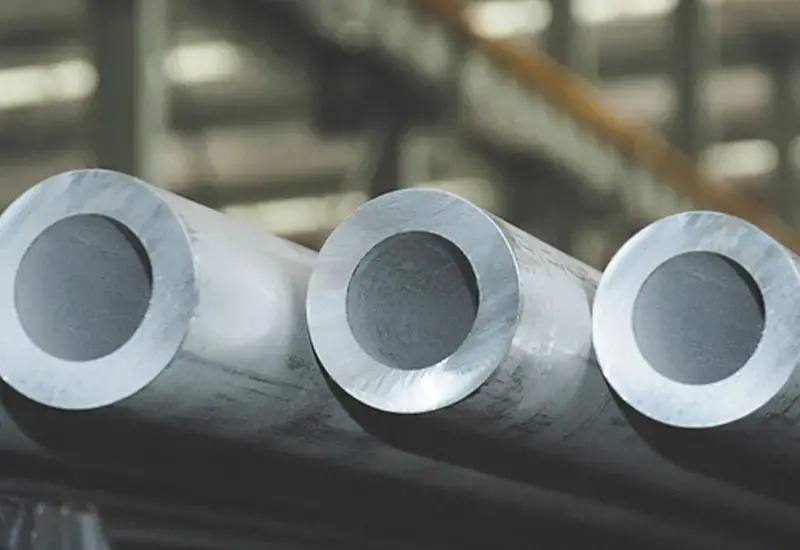
If you're specifying pipe for a chemical plant, an FGD system, or any environment where chlorides are a concern, you've likely faced this dilemma: 316L is starting to show its limits with pitting or crevice corrosion, but jumping to a duplex steel or a nickel alloy feels like overkill—and blows the budget. There's a material that lives squarely in that performance gap, and it's one of the most cost-effective upgrades you can make: 317L stainless steel (UNS S31703).
Think of 317L as 316L's tougher sibling. The key difference is a higher molybdenum content—typically 3-4% compared to 316L's 2-3%. This single change boosts its Pitting Resistance Equivalent Number (PREN), translating to meaningfully better resistance to attack from chlorides, acids, and other aggressive media. It's the logical next step when you need more reliability without a step-change in cost.
You don't specify 317L for everything. You use it where the environment actively challenges 316L. Here are the primary battlefields where it earns its keep:
Chemical & Petrochemical Processing: This is a core application. 317L pipe is the go-to choice for handling process streams containing chlorides, organic acids (like acetic or formic), or moderately concentrated phosphoric acid. If you're seeing issues in reactor feed lines, heat exchanger networks, or interconnecting piping, switching to 317L can dramatically extend service life and reduce unplanned downtime.
Flue Gas Desulfurization (FGD) Systems: Wet scrubbers are brutally corrosive. The combination of acidic condensate, chlorides, fluorides, and fluctuating temperatures quickly finds the weak points in 316L. 317L pipe is extensively used in the outlet ducting, reheaters, and slurry piping of FGD systems. It provides a crucial safety margin against localized corrosion in areas where 316L consistently fails, offering a much more economical solution than high-nickel alloys.
Marine, Coastal & Power Applications: For seawater cooling water lines—especially in low-flow areas prone to deposits or crevices—317L is a robust choice. It's also specified for condenser tube plates and piping in coastal power stations. While not for fast-flowing, clean seawater, it significantly outperforms 316L in many brackish and marine-influenced environments, buying you extra years of service.
Pulp & Paper Production: The bleaching stages (particularly chlorine dioxide, ClO2) and black liquor evaporation systems create a hot, chloride-rich, chemically complex soup. 317L pipe handles these conditions more reliably than 316L, resisting both general and localized corrosion in washers, filtrate lines, and evaporator circuits.
Here's a simple checklist. Consider 317L if:
Your process medium contains chlorides at moderate temperatures.
You've experienced pitting or crevice corrosion in existing 316L systems.
You need a performance boost but the project doesn't justify the cost of duplex (e.g., 2205) or nickel alloys (e.g., 904L).
The application is in FGD, chemical processing, or a marine environment.
In essence, if you're questioning the long-term reliability of 316L for your specific service, 317L is likely the most sensible and economical upgrade path.
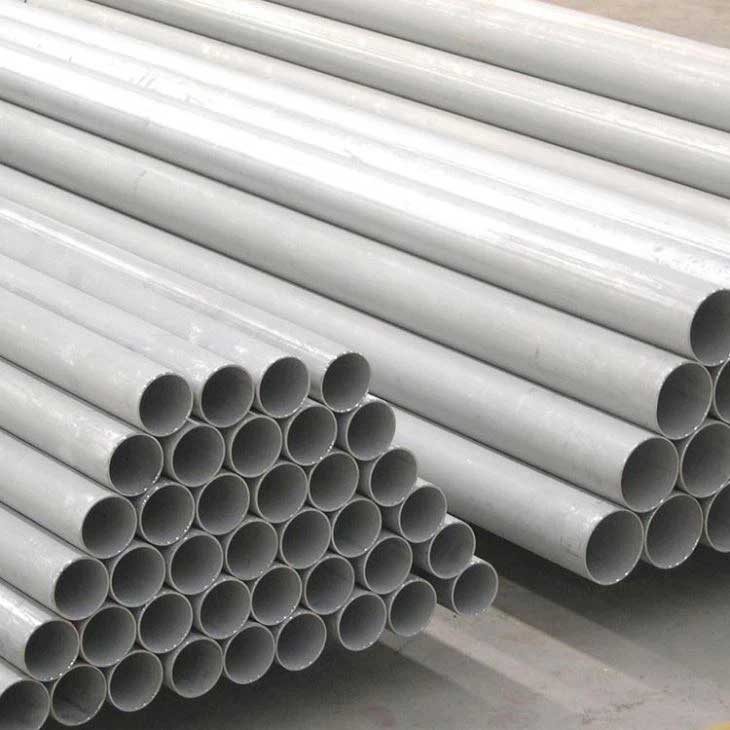
Specifying the right material is only half the battle. You need to procure the right product. Always ensure your 317L pipe is supplied to the relevant ASTM A312 specification for seamless or welded pipe, and demand a proper Mill Test Certificate. Pay attention to the actual molybdenum content reported; it should be solidly above 3%. For welded systems, using a matching ER317L filler metal is non-negotiable to maintain corrosion resistance in the weld seam.
We view 317L not just as a product we stock, but as a key engineering solution for a specific set of problems. We supply a full range of ASTM-standard 317L pipe and can provide the technical documentation and traceability you require. More importantly, our team can discuss your operating parameters—media, concentrations, temperatures—to help you determine if 317L is the right, cost-effective answer for your corrosion challenge.
Ready to solve a persistent corrosion issue? Contact us for detailed specifications on 317L pipe or to consult with our technical specialists on your application.