

Phone
+86-731-82250427
Address
25th floor, C3 Building, Wanda Plaza, Kaifu District, Changsha, Hunan Province, China.
 Mar 3 2026
If you’re reading this, you’re likely past the basic “what is S32906” stage. You know it as a super duplex stainless steel (UNS S32906, EN 1.4410) chosen for its formidable combination of strength (550 MPa min yield) and chloride resistance (PREN > 40). Your real questions are practical: how do I specify it correctly, procure it with confidence, and avoid the costly pitfalls that can derail a project?
This guide cuts to the chase, focusing on the execution phase for engineers and buyers who need this material to perform as promised.
Part 1: Specification – It’s in the Details
Getting the specification right is the first and most critical line of defence. Simply writing “S32906” on a drawing is an invitation for variability.
Demand the Full Standard Designation: Always specify the complete product standard. This locks in the required testing and properties.
For Plate/Sheet: ASTM A240/A240M, UNS S32906
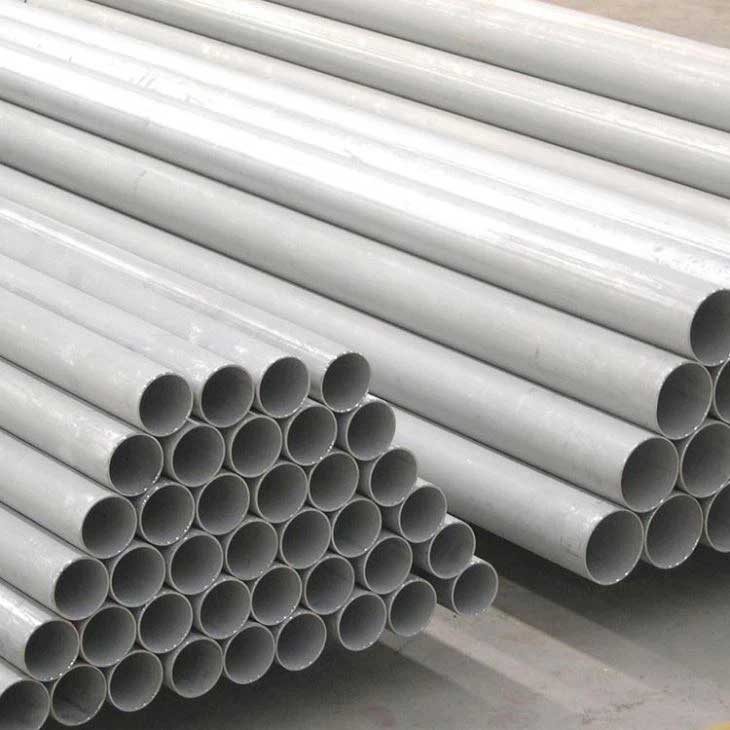
For Seamless & Welded Pipe: ASTM A790/A789, UNS S32906
For Bar: ASTM A479, UNS S32906
The MTC is Your Proof: The Mill Test Certificate isn’t just paperwork; it’s your legal verification. Scrutinise it. It must confirm:
Heat/Cast Number for full traceability.
Actual Chemical Analysis, ensuring critical elements like Molybdenum (~3%) and Nitrogen (~0.3%) meet the minimumspecified ranges—not just the “typical” values.
Full Mechanical Test Results, including impact toughness (Charpy V-Notch) at the designated temperature. This is non-negotiable for assessing low-temperature integrity.
Part 2: The Procurement Reality Check – Questions to Ask Your Supplier
Your supplier should be a technical resource, not just a logistics provider. Their answers to these questions separate partners from order-takers.
“Can you provide a sample MTC from your current stock or last shipment?” This reveals their typical material source and quality level before you commit.
“What is your standard practice for verifying material identity upon receipt?” Reputable suppliers conduct positive material identification (PMI) with handheld XRF analysers as a basic check against MTC data.
“Do you provide or recommend welding procedure specifications (WPS) for this grade?” If they understand that S32906 requires specific, low-heat-input procedures and matching filler metals (like ER2594), it’s a strong indicator of practical expertise
“What are the lead times for non-standard sizes, and which mills do you source from?” Transparency on sources (e.g., Outokumpu, Sandvik, et al.) and realistic timelines help manage project scheduling.
Part 3: Navigating the Hidden Costs – Fabrication & Beyond
The cost of S32906 isn’t just the price per kilo. The real economics are in total installed cost.
Machining & Forming: Inform your workshop that this material work-hardens rapidly. They need sharp, rigid tooling and should plan for lower cutting speeds than with 316L or 2205. Factoring this in avoids shop-floor surprises and cost overruns.
Welding – The Make-or-Break Factor: This is where most material failures originate. Emphasise to your fabricator:
Dedicated, clean work areas are essential to prevent carbon steel contamination.
Strict control of interpass temperature (typically <100°C) is crucial to prevent harmful secondary phase formation.
Post-weld heat treatment is usually not required and can be detrimental if done incorrectly.
Surface Integrity: Remind stakeholders that any thermal cutting (plasma, laser) leaves an affected edge. For corrosive service, this area must be removed by machining or ground smooth, followed by passivation to restore the corrosion-resistant surface layer.
Part 4: Making the Decision – Is It the Right Choice?
Re-confirm the “why” before finalising. S32906 is the strategic choice when:
2507 (S32750) is too close to its corrosion limits in your specific environment, requiring excessive safety margins.
A nickel-based alloy provides over-specification on corrosion but at a significantly higher cost, and you need the higher strength of duplex.
Your design leverages its strength for weight reduction (thinner walls) or to meet stringent mechanical requirements in a corrosive setting (e.g., pump shafts, fasteners).
Final Advice: Source the Expertise with the Material
Ultimately, a successful S32906 application hinges on three pillars: flawless material, skilled fabrication, and informed procurement. The right supplier contributes directly to the first and third, and can significantly aid with the second by providing reliable technical guidance.
Look for a partner who engages with these technical details as standard practice. It’s the surest sign that they understand what you’re really buying: not just a high-performance alloy, but the successful outcome of your project.
Need to discuss a specific application or review a specification? Our technical team specialises in navigating these exact challenges with super duplex grades. Contact us for a consultation or to request certified stock lists.