

Phone
+86-731-82250427
Address
25th floor, C3 Building, Wanda Plaza, Kaifu District, Changsha, Hunan Province, China.
 Apr 21 2026
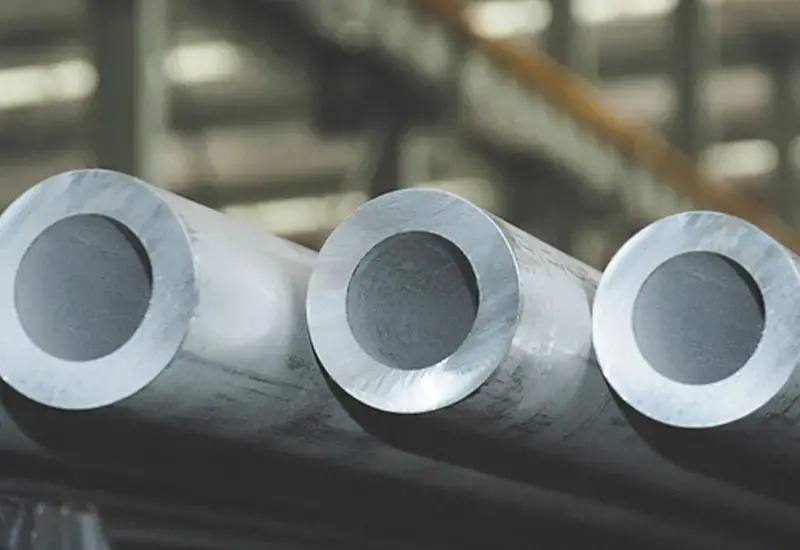
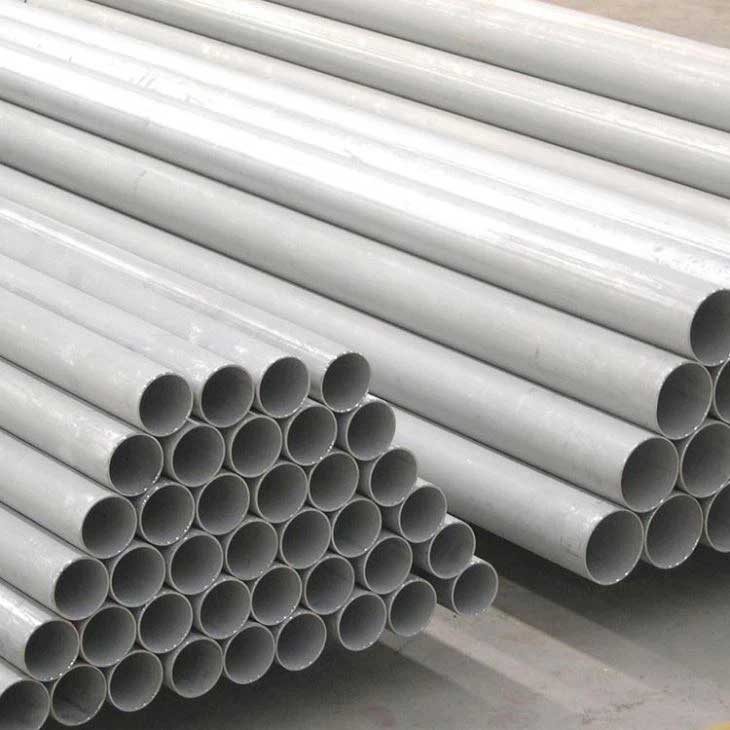
In demanding industrial environments, piping systems must withstand more than just corrosion; they face high pressures, mechanical stress, and the relentless attack of chlorides. While standard austenitic grades like 316L may lack sufficient strength, and high-nickel alloys can strain budgets, a third path exists. S31803 duplex stainless steel pipe delivers a critical engineering advantage: it combines the high strength of ferritic steels with the corrosion resistance of austenitics. This unique dual-phase structure makes it the definitive choice for applications where both structural integrity and longevity in aggressive media are non-negotiable, offering a superior performance-to-cost ratio in its class.
The secret to S31803’s value lies in its name: duplex. Its microstructure consists of a near-equal mix of two phases—austenite and ferrite. This isn't just a metallurgical detail; it’s the source of its economic and performance advantage.
The Strength of Ferrite: The ferrite phase provides high strength and resistance to stress corrosion cracking (SCC), a common and catastrophic failure mode in chloride-rich environments like seawater and oilfield brines.
The Toughness of Austenite: The austenite phase contributes excellent toughness and improved corrosion resistance in acidic conditions.
The result is a synergistic effect. S31803 pipe offers roughly double the yield strength of standard 316L stainless steel. This allows for the use of thinner wall pipes, leading to material savings, reduced weight, and lower installation costs, without compromising pressure rating or structural integrity. It’s a prime example of smarter engineering delivering better economics.
This balance makes S31803 pipe uniquely suited for specific, demanding sectors where both corrosion and cost are critical factors.
Oil & Gas Production & Transportation: This is a classic use case. S31803 is ideal for flow lines, separator internals, and piping handling corrosive, chloride-containing production fluids (oil, gas, and water). It withstands the combined threats of CO2, chlorides, and H2S (sour service) far better than 316L, at a fraction of the cost of super duplex or nickel alloys. It’s the pragmatic choice for extending asset life in offshore platforms and onshore facilities.
Seawater & Brackish Water Systems: For seawater cooling pipes, firewater systems, and desalination intake lines, chloride-induced pitting and SCC are the top concerns. S31803’s high chromium and molybdenum content, combined with its duplex structure, provides superior resistance, making it a reliable and cost-effective upgrade from 316L for coastal and offshore plants.
Chemical & Petrochemical Processing: In plants handling moderately aggressive chemicals, S31803 serves as a robust workhorse for process piping, heat exchanger tubes, and effluent treatment systems. It handles a wide range of organic and inorganic acids, offering a safety and longevity margin over standard grades where conditions are too harsh for 316L but don’t justify the expense of 904L or Hastelloys.
To unlock its full value, correct specification and handling are key.
Know the Limits: S31803 excels in a wide range, but it’s not for all extremes. It is not typically recommended for prolonged service above about 300°C (570°F) or in highly reducing acidic environments. Understanding its operating window is crucial.
Fabrication Fundamentals: Its high strength requires more power for cutting and forming. Welding S31803 requires precise control (using 2209-grade filler metals) and managed heat input to preserve the beneficial 50/50 phase balance in the weld zone. Partnering with a fabricator experienced with duplex stainless steels is highly recommended.
The Specification Checklist: Ensure your pipe meets ASTM A790/A789 for seamless/welded versions. Key checks include a Pitting Resistance Equivalent Number (PREN) above 34 and proper solution annealing to ensure optimal corrosion resistance.
The decision often comes down to a Total Cost of Ownership (TCO) analysis. While the per-ton price of S31803 is higher than 316L, its higher strength can reduce tonnage required. When you factor in vastly extended service life, reduced maintenance downtime, and avoidance of catastrophic failure, S31803 consistently proves to be the more economical choice over the lifespan of an asset in moderately to highly aggressive environments.
It is the definitive answer when 316L is at risk and super duplex grades like S32750 are over-specified. It occupies the sweet spot of the performance-cost curve.
S31803 duplex stainless steel pipe offers a compelling way to enhance reliability and longevity without resorting to prohibitively expensive materials. It represents pragmatic engineering for real-world industrial challenges.
Evaluating piping for oil & gas, seawater, or chemical service? Let’s discuss if S31803 is the optimal balance of performance and budget for your specific conditions. Contact Ronsco technical experts for a comparative material analysis or to request a quote for certified S31803/2205 pipe.